Why Automobile Businesses Need a Specialized Branding Agency
How specialized automotive branding can help dealerships and automobile businesses build trust, differentiate their brand, improve digital visibility and generate more relevant customer opportunities.
Why does an automobile business need specialized branding?
Automobile businesses operate in a highly competitive market where customers evaluate vehicles, price, finance options, reviews, service support, reputation and overall brand experience before making a purchase decision.
A specialized automobile branding agency builds its strategy around these industry-specific buying behaviours instead of applying the same marketing approach used for unrelated industries.
The automobile industry covers two-wheelers, electric vehicles, passenger cars, commercial vehicles and premium automobiles. Customers increasingly evaluate more than the vehicle itself—they also consider trust, performance, service and brand experience.
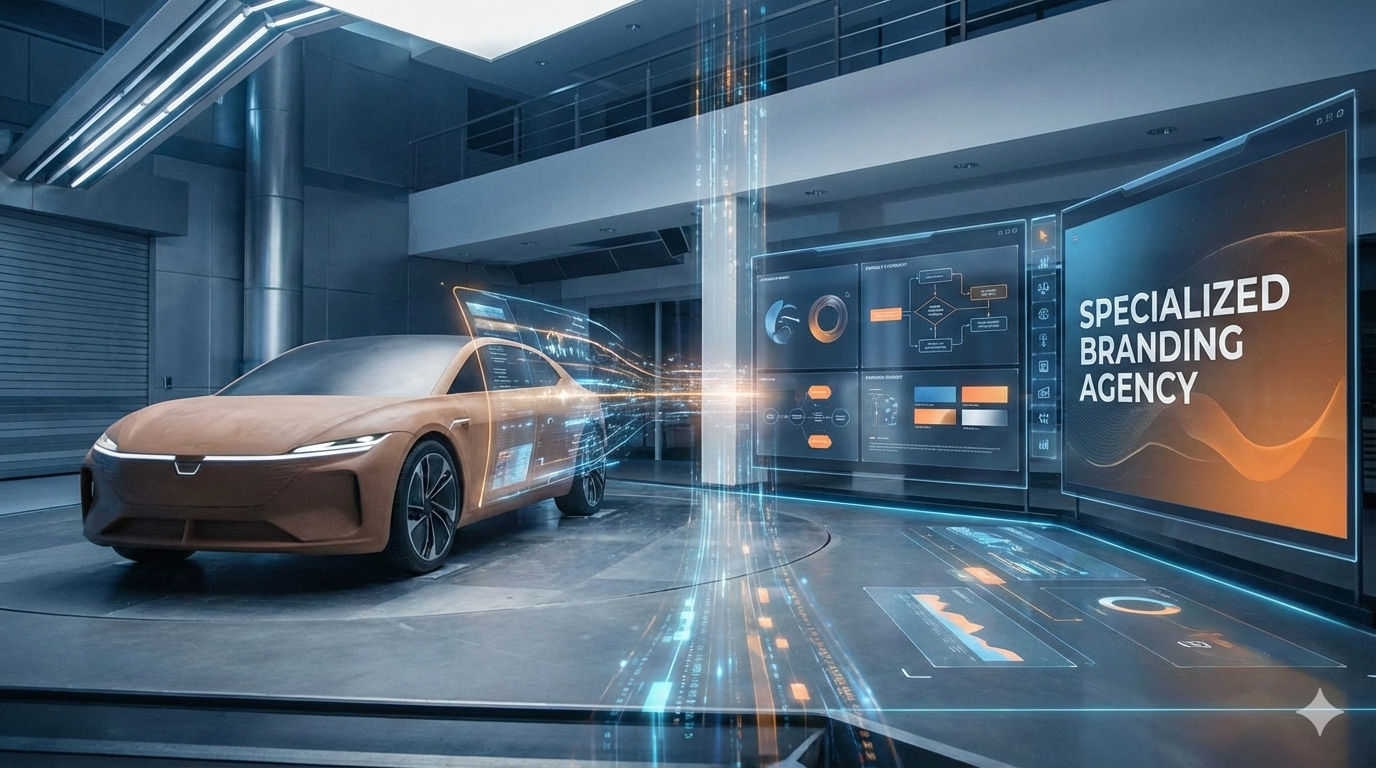
Generic marketing can miss the nuances of automobile sales cycles, customer psychology, local market behaviour, showroom communication and vehicle-specific positioning. A niche branding strategy helps connect those elements into one consistent customer journey.
Automobile dealerships and manufacturers compete with local, regional, national and global brands. Customers can compare price, features, mileage, finance options, service, reviews and alternatives before contacting a dealership.
- Differentiate the dealership or automobile business from competitors.
- Communicate the value proposition clearly.
- Position the showroom or dealership consistently.
- Highlight relevant strengths such as service, warranty, finance support, customer experience or product features.
Strong positioning gives customers a clear reason to remember and consider the business.
Vehicle purchases are usually high-consideration decisions. Buyers can care about reliability, safety, status, comfort, performance, ownership experience and long-term value.
Customer Psychology
Understand concerns and motivations at different stages of the automobile buying journey.
Emotional Connection
Use relevant visual storytelling and brand communication to build familiarity and confidence.
Trust Signals
Showcase authentic customer experiences, vehicle deliveries, service information and useful ownership content.
Effective automotive branding is not simply about gaining attention. It should help customers understand why they should trust the business.
Automobile branding requires more than attractive graphics. Marketing teams need to understand the products, offers, customer journey and market context.
Vehicle variants and specifications
Finance schemes, EMI offers and exchange programs
EV-related incentives and customer education
Festival and seasonal sales patterns
Regional customer preferences
A specialized team can adapt the communication strategy according to the product, audience, location and stage of the buying journey.
Customers can research vehicles, dealerships, specifications, reviews, videos, finance information and offers online before entering a showroom.
Automotive SEO
Build useful pages around relevant vehicle, dealership, service and location-related search intent.
Lead Generation
Create landing pages and campaigns designed around relevant enquiries, test drives and purchase intent.
Paid Advertising
Align campaigns with vehicle categories, audiences, geography and specific customer intent.
Video & Social
Use walk-throughs, feature demonstrations, customer stories, test-drive content and short-form videos.
Automotive brands have many visual touchpoints. Consistency across those touchpoints can make the business easier to recognize and remember.
- Showroom photography
- Vehicle presentation
- Social media creatives
- Vehicle delivery moments
- Promotional videos
- Website visuals
- Consistent colours and typography
- High-quality vehicle photography
- Clear feature-focused creatives
- Professional short-form videos
- Consistent campaign messaging
Automobile businesses can waste marketing budget when campaigns attract enquiries that have little relevance to the actual product, location or buying intent.
- Target relevant audience segments.
- Align campaigns with actual purchase intent.
- Use location-based targeting where appropriate.
- Separate awareness, test-drive and offer campaigns.
- Improve landing-page clarity and call-to-action placement.
The objective should be better-qualified opportunities and a better connection between marketing activity and the sales process.
Automobile demand can vary significantly by region. Language, price sensitivity, finance behaviour, product preferences, cultural context and seasonal demand can influence communication.
Local Language
Communicate in the language and style most comfortable for the target audience.
Regional Relevance
Adapt messaging to local customer expectations and market conditions.
Seasonal Demand
Align campaigns with relevant local events, festivals and buying cycles.
Finance Behaviour
Communicate finance and affordability information clearly when relevant.
For a dealership serving Madurai or other Tamil Nadu markets, local search, local content and region-specific communication can be integrated into the broader automotive brand strategy.
Automobile businesses still rely heavily on physical experiences such as showrooms, roadshows, test drives, delivery events and promotional displays.
Showroom Events
Promote relevant events and campaigns through digital channels.
QR Campaigns
Connect physical advertising with digital forms and landing pages.
Consistent Visuals
Align hoardings, standees, digital creatives and showroom communication.
Sales Alignment
Coordinate digital campaigns with on-ground sales activities.
Electric vehicles and new mobility technologies create new customer questions around charging, range, ownership, maintenance, incentives, technology and environmental considerations.
EV Education
Explain EV concepts clearly and address common customer questions.
Myth & Fact Content
Create useful content that helps customers understand ownership and technology-related concerns.
Future-Ready Positioning
Position the business around relevant technology and mobility trends.
Short-term offers can support immediate sales, but a sustainable automotive business also needs recognition, reputation, customer engagement and long-term trust.
Consistent Messaging
Keep the brand promise and core positioning clear across channels.
Customer Engagement
Continue communication beyond the first enquiry and purchase.
Reputation Management
Encourage authentic customer feedback and address service concerns.
High-Value Content
Publish useful automotive information that supports customer decisions.
Automotive SEO should connect technical website quality with the questions and decisions customers make during vehicle research.
Vehicle Search Intent
Build useful content around vehicle categories, models, features, comparisons and customer questions.
Dealership Search Intent
Make dealership location, services, contact information and customer journey information easy to find.
Technical SEO
Maintain crawlable pages, logical URLs, canonicalization, internal linking, mobile usability and structured HTML.
Content SEO
Publish useful guides, comparisons, service content, FAQs and decision-support resources.
Automobile customers ask practical questions before contacting a dealer. AEO-oriented content should provide direct, useful answers before expanding into supporting detail.
Vehicle Questions
Answer questions about features, specifications, ownership, comparisons and suitable use cases.
Finance Questions
Explain the process around finance, EMI, exchange and related dealership procedures where applicable.
Service Questions
Answer questions about maintenance, service schedules and support.
Local Questions
Address dealership location, test drives, availability, service areas and contact processes.
Generative Engine Optimization focuses on making business information easier for modern AI-powered search systems to understand.
Entity Clarity
Clearly identify the dealership, company, products, services, people and locations.
Structured Information
Use logical sections, lists, tables, definitions and appropriate structured data where relevant.
Trust Signals
Maintain accurate business information and demonstrate expertise through useful content and transparent authorship.
Consistent Digital Identity
Keep important business facts consistent across relevant websites, profiles and digital references.
Useful Content
Create genuinely useful pages that satisfy real customer intent.
Technical Quality
Keep important pages crawlable, accessible and logically structured.
Topical Authority
Build connected content around automobiles, dealerships and services.
Local Relevance
Make location, service areas and local customer information explicit.
Entity Signals
Keep the identity and relationships of the dealership and its services clear.
Question Coverage
Answer the questions customers ask throughout the buying journey.
Internal Linking
Connect related vehicle, service, location and informational pages.
Brand Consistency
Maintain accurate and consistent information across relevant channels.
Qualified Leads
Measure the relevance of enquiries rather than volume alone.
Test Drive Interest
Track requests and customer actions connected to vehicle discovery.
Organic Visibility
Monitor relevant organic search visibility and landing-page performance.
Local Discovery
Review local search interactions and customer discovery signals.
Campaign Efficiency
Evaluate campaigns against the business objectives they were designed to achieve.
Customer Feedback
Track customer reviews, recurring concerns and brand perception.
Why does an automobile business need a specialized branding agency?
Automobile businesses operate in a highly competitive market where customers evaluate vehicles, price, finance options, reviews, service support, reputation and overall brand experience before making a purchase decision.
What does automobile branding include?
Automobile branding can include positioning, visual identity, showroom communication, social media creatives, website messaging, vehicle campaigns, content marketing, advertising, local search and customer experience communication.
How can branding improve an automobile dealership?
Strong branding can make a dealership easier to recognize, communicate its value clearly, differentiate it from competitors and create a more consistent customer experience.
Is digital marketing important for automobile dealerships?
Yes. Automobile buyers can research vehicles, dealerships, reviews, specifications, finance information and offers online before contacting a sales team.
What is the role of SEO in automobile marketing?
Automotive SEO helps a business create useful pages around relevant vehicle, dealership, service and location-related searches while improving technical accessibility and content quality.
What is local SEO for an automobile dealership?
Local SEO helps a dealership become easier to discover for location-based searches by maintaining accurate business details, useful local content and consistent digital business information.
What is AEO for automobile businesses?
AEO focuses on clearly answering questions customers ask about vehicles, finance, service, test drives, dealerships and ownership.
How does GEO relate to automobile branding?
GEO focuses on making business information clear, structured and context-rich so AI-powered search systems can better understand the dealership, products, services and locations it represents.
Why is lead quality more important than lead quantity?
Large numbers of poorly qualified enquiries can consume sales-team time. Automotive marketing should focus on relevant audiences, useful offers, accurate targeting and genuine buying intent.
Should automobile branding include offline marketing?
Yes. Showrooms, roadshows, test-drive events, delivery experiences, hoardings and other physical touchpoints can be integrated with digital campaigns for a consistent customer journey.
Why is regional marketing important for automobile businesses?
Vehicle preferences, language, pricing sensitivity, finance behaviour, seasonal demand and cultural factors can vary by location, making regional relevance important.
How should an automobile business measure branding performance?
Useful measures can include qualified leads, test-drive requests, website engagement, organic visibility, local discovery, conversion rates, campaign efficiency and customer feedback.
The automobile industry demands more than generic marketing. It requires industry understanding, creative consistency, customer-focused communication and strategic execution.
A specialized automobile branding strategy can connect brand positioning, visual identity, digital marketing, SEO, local SEO, AEO, GEO, lead generation, showroom communication and long-term customer relationships.
For automobile businesses aiming to become easier to recognize, discover and trust, specialized branding can become an important part of long-term growth.
Ready to Drive Your Brand Forward?
Build a stronger automobile brand with industry-focused branding, digital marketing, SEO, local visibility, AEO and GEO strategies.
Talk to Our Automobile Branding ExpertsYour brand journey to stronger market visibility starts with the right strategy.